This post is meant to be a one-stop shop for all of the questions that you have about the different styles of diapers you have to choose from. I will be reviewing the pros and cons of every style of diaper that I am familiar with, as well as the different fabric options for inserts.

Before we get started I want you to know that I am no expert and I only have first-hand experience with two styles of diapers. All of the info in this blog post is based off of the research I did as my own family invested in cloth diapering. Every opinion given is 100% my own.
Styles of Cloth Diapers
Alright, let’s get started. It’s important to realize that there is not one end all style of diaper that is absolutely perfect for every single person that tries it. Every style has its pros and its cons. It all comes down to choosing what will work for you and your family the best. Most families actually use more than one style of diaper, each with it’s own purpose. My advice: be flexible and have an open mind. Let this be a process.
Flat
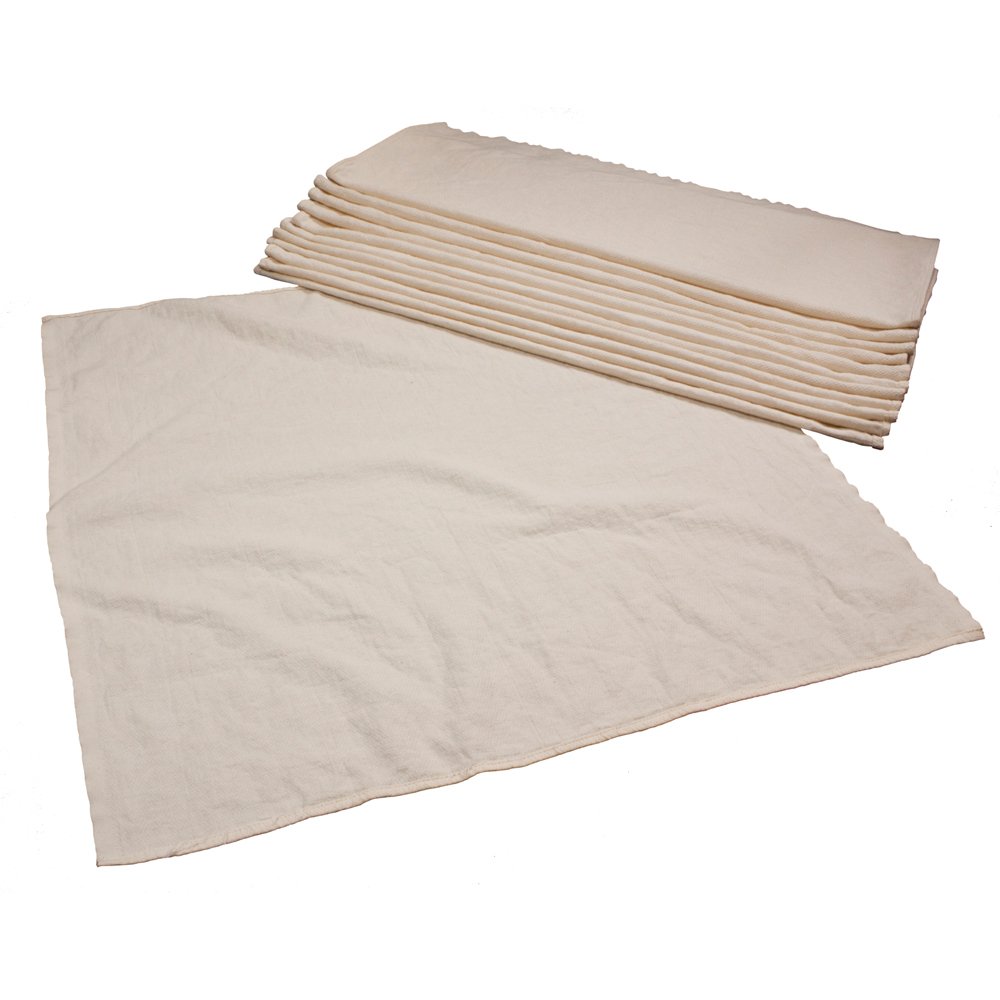
Flats are the most old-fashioned and cheapest form of cloth diaper. They are basically a large piece of fabric that you can fold in various ways to from a diaper. There are tons of websites and videos demonstrating different ways to fold a flat for different absorbency needs. You can buy flats from retailers, or make your own from scrap fabric or even old t-shirts. Flats are traditionally held in place by a large diaper pin, but nowadays parents use a Snappi to fasten the diaper. Flats are absorbent, but not waterproof, so they need to be worn with a waterproof cover over top.
PROS
- Cheapest option by far
- Most customizable
- Fast drying
- Easy to wash
- Fit from birth well into toddler years (or older)
CONS
- Have to fold each diaper individually
- Learning curve
- Not as simple for babysitters or grandparents to use
Prefold
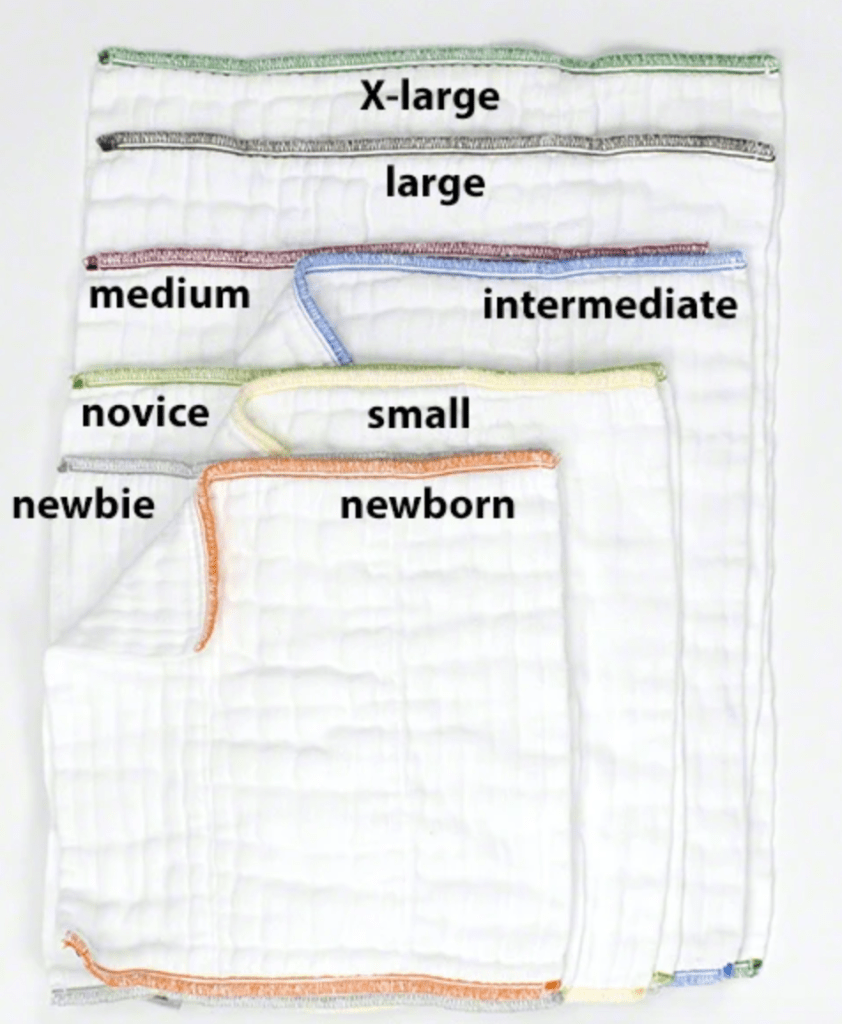
A prefold is very similar to a flat. However a prefold is typically smaller and the layers of fabric are sewn in where absorbency is needed, so rather than folding it to create absorbency and fit it to your baby, you simply fit it to your baby. A prefold can also be added to other styles of diaper to increase absorbency (for example, overnight). These diapers are also held together by a Snappi and need to be worn with a cover to create a waterproof barrier.
PROS
- Very affordable
- Fast drying
- Easy to wash
- Lots of ways to repurpose after baby grows up
- Can be used from birth to potty training
CONS
- Have to fold each diaper to fit your baby
- Finding the right fold technique may take trial and error
- Learning curve
Fitted
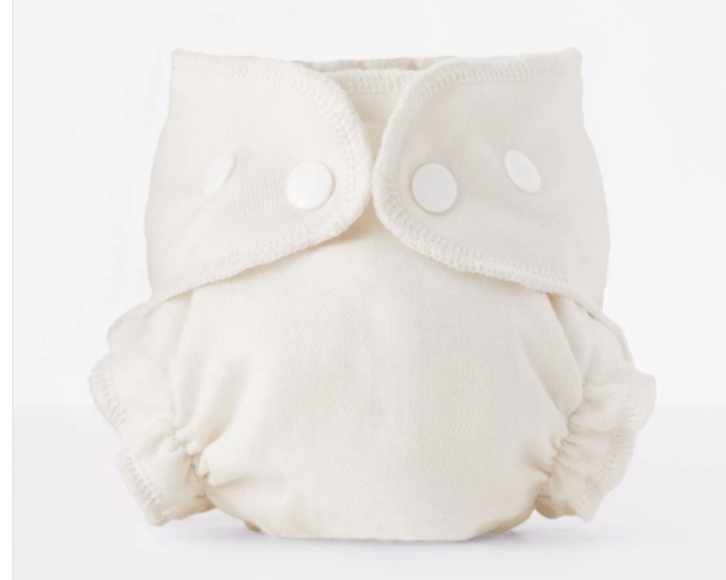
A fitted diaper is just how it sounds. It is a cloth diaper that is fitted to your baby. These diapers typically come with either snap or velcro hook and loop closure and are very absorbent. They are not waterproof, so a fitted diaper must be worn with a waterproof cover over top of it. Fitted diapers typically come in 2 or 3 sizes. A Newborn size typically fits babies less than 12 lbs, a Size One typically fits babies from 7-18 lbs, and a Size Two typically fits babies from 18-35 lbs.
PROS
- Fitted to baby’s shape
- No folding required
- Very absorbent (ideal for overnight sleep)
- Moderate drying time
- Only need to change the fitted inner as long as the waterproof outer is unsoiled.
CONS
- Not waterproof, must be worn with a waterproof cover
- Often very bulky fitting on baby’s bum. This may affect clothing fit
- Bulky to store
- Can be expensive
- Often need two sets to go from birth to potty training (Size One’s and Size Two’s)
All-In-Two (AI2) or Hybrid
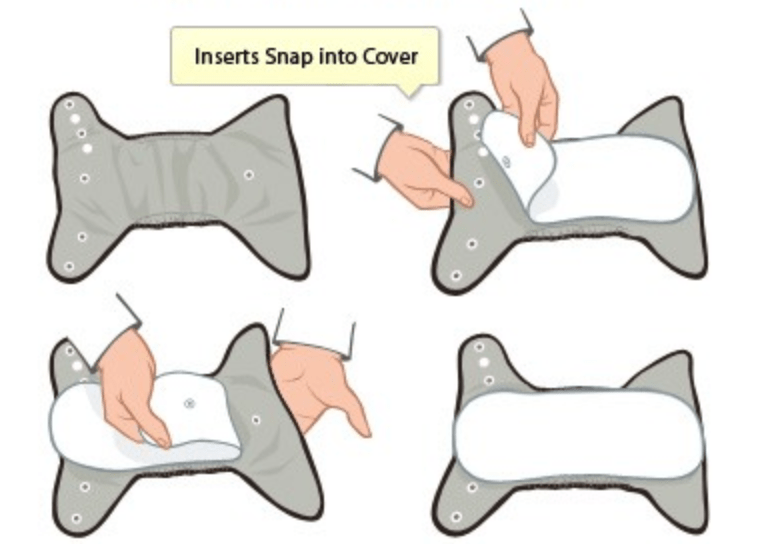
An All-In-Two diaper (or more commonly referred to as AI2) is named so because the entirety of the diaper consists of two components: the cover and the insert. These diapers are also referred to as Hybrid diapers because the combine the inserts of pockets diapers with the covers of fitted, prefold, or flat diapers. With an AI2 system, you would have a set of waterproof diaper covers with snaps or velcro on the outside of the diaper for fitting to your baby and snaps on the inside of the diaper for attaching absorbant inserts to the panel that goes between baby’s legs. When changing a wet or dirty AI2, you simply remove the soiled insert, wipe down the cover if needed, and then snap in a new, clean insert. No need to change the cover unless it is really dirty and needs to be washed. AI2’s typically come in a one size outer, with different sized inserts, fitting babies from 8-35 lbs.
PROS
- Only need to change the soiled insert unless the cover is dirty as well.
- Quick drying
- Easy to launder
- Easy to teach the babysitter how to use
- Small to pack into diaper bag
CONS
- Absorbency is not customizable. It is difficult to add additional inserts
- Your inserts must be the same brand as your covers for proper fit
- Inserts are often sized
- Can be expensive
- May have many pieces to store
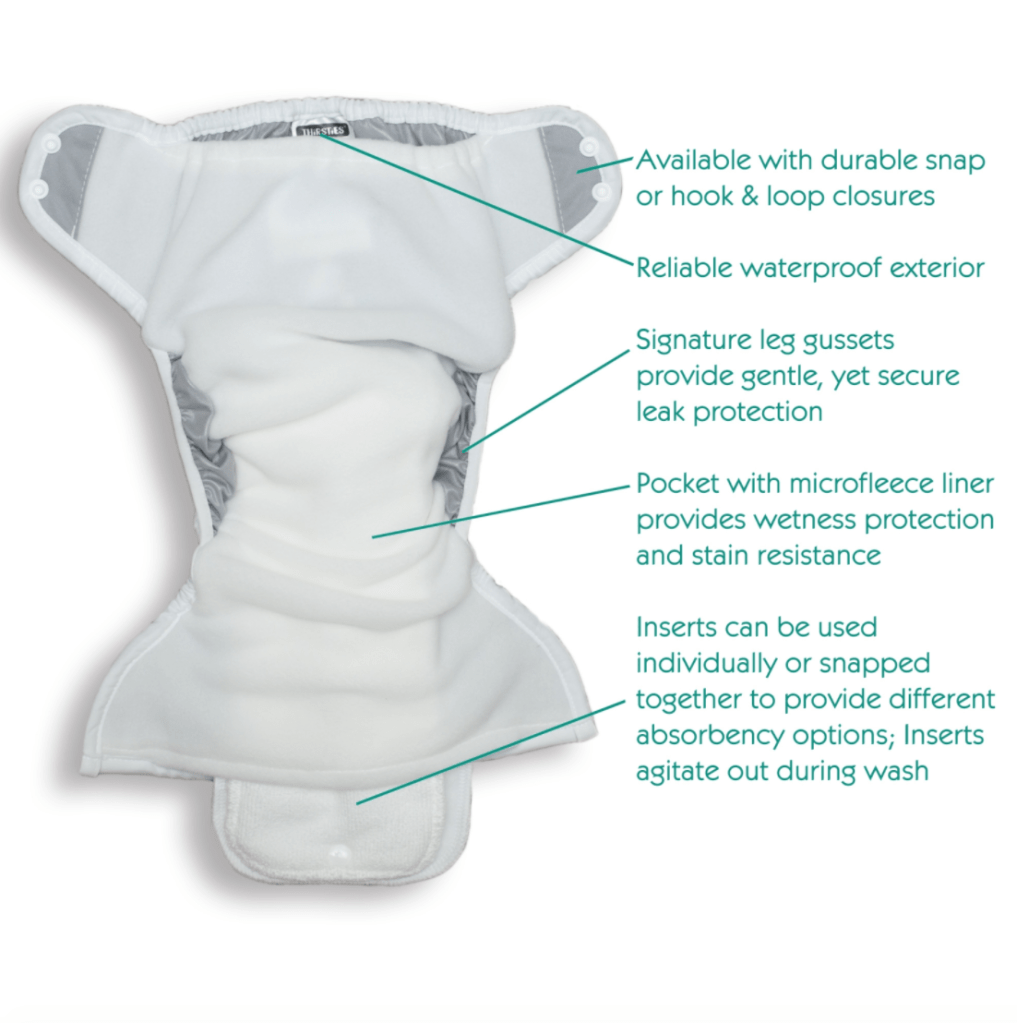
Pocket diapers are possibly the most popular option for modern cloth diapering parents. A pocket diaper has a waterproof exterior and a soft, stay dry interior. Down the center of the diaper (the part that goes between baby’s legs) there is a second layer of material sewn in and left open at one or both ends. This is the “pocket” of the diaper. The absorbency of the pocket diaper all depend on how you “stuff” it. Stuffing a pocket diaper refers to what type and how many inserts you place into the pocket of the diapers before you put it on the baby. Many people stuff their pocket diapers as part of their laundry routine so they don’t have to worry about it when it’s actually time to change the wet, stinky baby. Pocket diapers typically come in a one size diaper, fitting babies from 7-35 lbs and have either snap or velcro hook and loop closure.
PROS
- Very customizable absorbency for boys, girls, heavy wetters, or blowout prone babies.
- Lots of brands and patterns
- Can use any brand or type of insert. Even homemade ones!
- Affordable
- Moderately quick drying
CONS
- Inserts need to be taken out of the pocket for laundering (usually)
- May take some trial and error to find your stuffing preference
- Have to stuff the diapers every time you wash them (2-3 times per week) which can be time consuming
All-In-One (AIO)
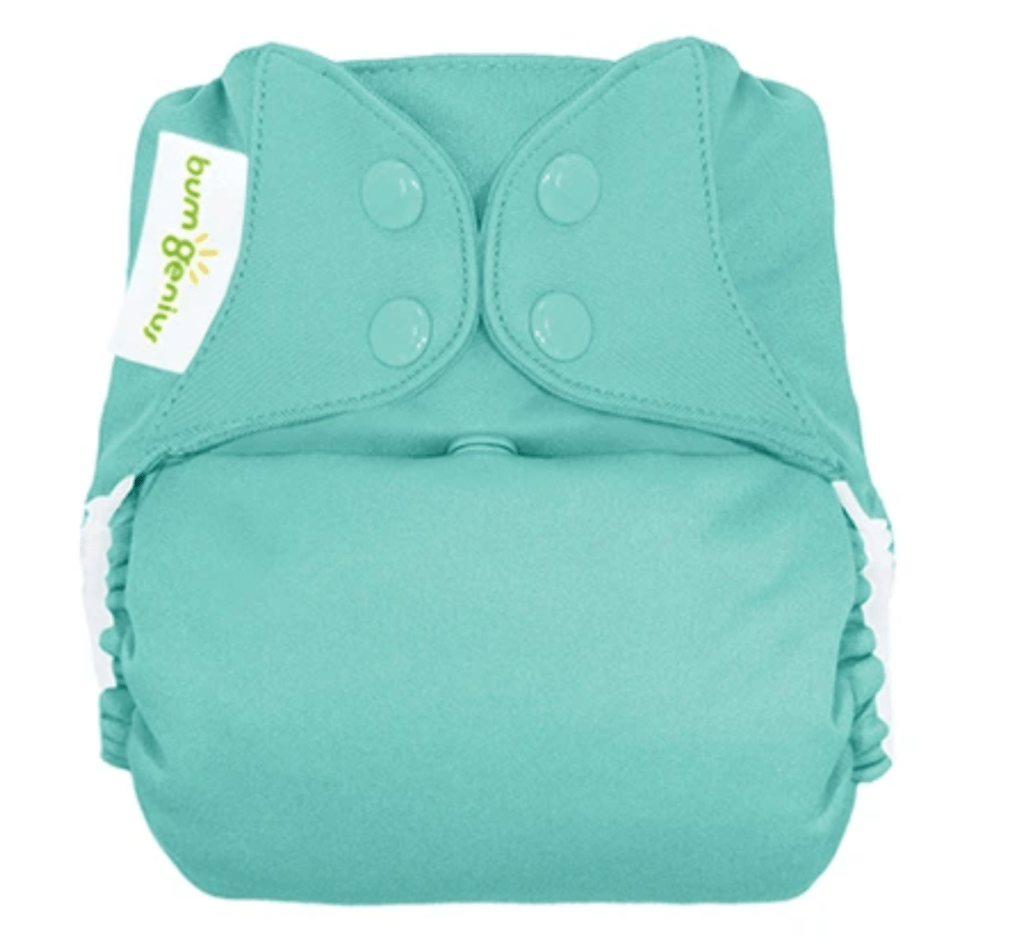
An All-In-One (or AIO) diaper is exactly what it sounds like. Everything you need for the diaper is all in one piece. There is no folding, no stuffing, no snapping, no cover, nothing. It is all in one diaper. Due to this, these are the most like disposable diapers when it comes to changing your baby. When the diaper is wet or dirty you take the whole thing off, wipe and dry baby’s bum, put a whole new diaper on, and throw the soiled one in the wet bag. No inserts to remove or covers to replace. These diapers can also be some of the more expensive diapers and they take a long time to dry. An AIO will often come in a one size fits most and is suggested for babies weighing from 8-35 lbs. However, each brand shapes their diaper a little differently, so you may need to try a few to find a good, leak-proof fit for your baby.
PROS
- Easy diaper changes
- Easy to teach other caregivers to use (babysitters, grandparents, daycare providers, etc.)
- No stuffing, folding, snapping, or inserts required
CONS
- Having all the absorbent layers sewn into the diaper makes getting them really clean somewhat difficult
- Very, very slow drying
- Sizing will vary from brand to brand. You may need to try a few to find a good fit.
- Expensive
Covers
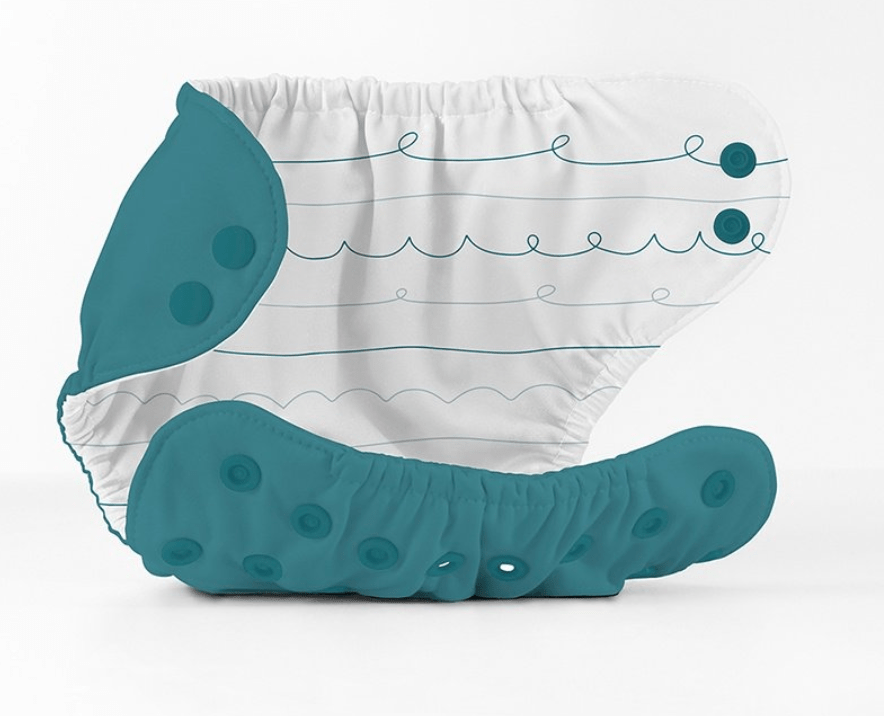
I included covers in this section because, even though they aren’t a cloth diaper all on their own, they are important to the cloth diapering world. Covers are used with flats, prefolds, and fitted cloth diapers. A generic waterproof cover will not typically work for an AI2/Hybrid diaper because it will not have the snaps or flaps for securing the inserts into the diaper. Covers can either be one size fits most or come in multiple sizes. They are simply the waterproofing component of styles of diapers that don’t have the waterproofing built in.
PROS
- Affordable
- Come in various cute prints
- Can be used with several different types of diapers
- Don’t need to be changed at every diaper change. They can be reused as long as they are still clean and dry
- Extremely quick drying
CONS
- No absorbency on their own
- If made of PUL (usual material) they may irritate some babies’ skin
- Not as breathable as other styles of diaper
- May get worn out more quickly if routinely dried in a drier. Better to air dry.
Types of Inserts
Have I overwhelmed you yet? I hope not. If you have decided that a pocket or AI2/Hybrid diaper is one of the styles that you will be using for your family, your decision making isn’t quite over. You will need to choose what type of inserts you will want to use. But don’t worry, I’ll walk you through the most common options.
Cotton
Cotton inserts are the most affordable insert on the market and the classic cloth diaper material. Organic cotton is gentle on baby’s skin and cotton is fairly absorbant. You may need to use several layers of cotton which can make your diaper a bit bulky. Cotton is also not moisture wicking. An organic cotton prefold, folded into thirds, is a great option for an absorbent cotton insert.
Bamboo/Charcoal Bamboo
Bamboo and charcoal bamboo, are very popular inserts. Bamboo is a synthetic material that is very absorbent and gentle on baby’s skin. It has moisture wicking properties to help keep your baby’s skin dry and compression leaks are less likely with this material. Charcoal bamboo is dark in color, so these inserts are less likely to become stained after multiple uses.
Microfiber
Microfiber is known for being a very, V E R Y absorbent material. However, microfiber should never be placed directly against your baby’s skin. It should always be placed in a pocket or underneath another type of insert or a fleece liner. Microfiber inserts are fairly thick and compression leaks are a possibility with these inserts. Their absorbency makes them a popular overnight option. You can make your own microfiber inserts with fabric from the craft store, just make sure that you put a layer of fleece between the microfiber and your baby’s bum.
Hemp/Hemp & Cotton Blend
If you find an insert labeled as “hemp” it is likely a blend of hemp and organic cotton. Hemp is the thinnest and trimmest option for an insert, while still maintaining a very high level of absorbency. Hemp inserts are usually a little stiff at first, so running them through a dryer may help soften it. Hemp is also often the most expensive option.
SPACE
Many parents mix and match inserts to achieve the absorbency they need. Some fold they insert on one end to add an extra layer in the front of baby boys’ diapers. Some sandwich a bamboo insert between two layers of hemp for naps and nighttime sleep. Others use microfiber in every pocket diaper, knowing the stay dry pocket fabric protects their little ones’ bums from the irritating microfiber. Find what works best for you and your little fluff-butt!
I hope all of that word vomit was helpful. If you have any questions, comments, or corrections, please leave me a comment! Also if you have experience with cloth diaper and have information to add, I would absolutely love to chat and get your input.


 BARREL OF MERRELL'S
Leave a comment