Make a full 100% switch to cloth diapers from disposables was a great decision for my family and one that I am very happy with. That being said, we still had (and continue to have) some bumps in the road.
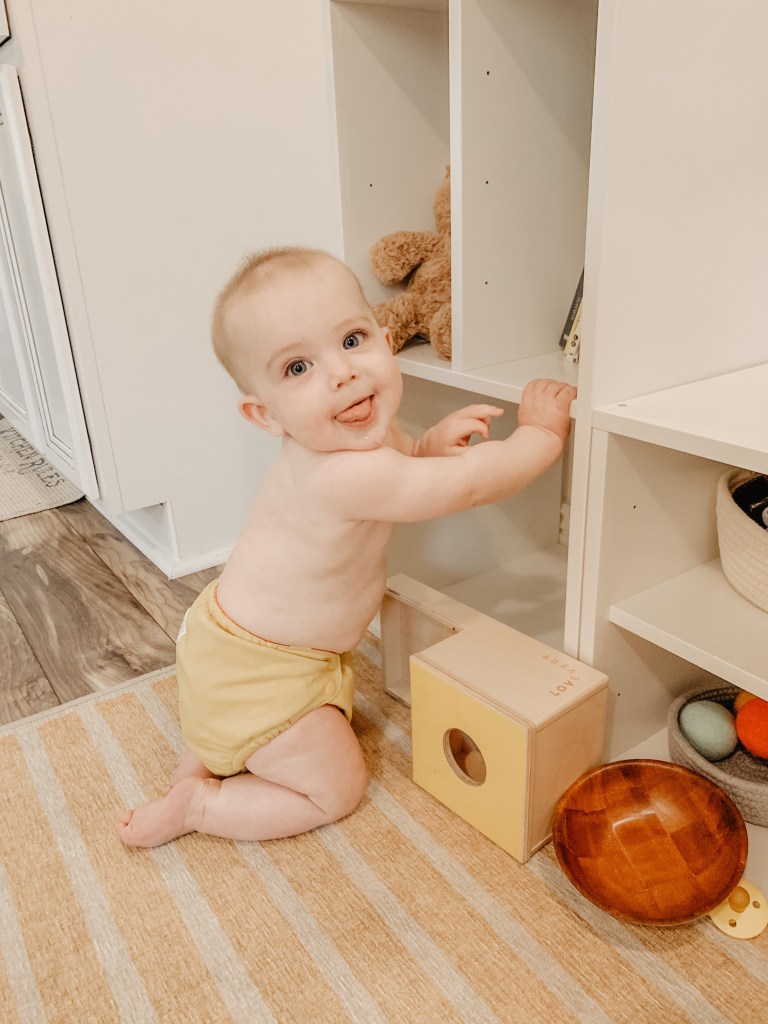
Cloth diapers get kind of a bad rep I think. People hear you are using cloth or reusable diapers and they balk immediately. They get a bad reputation from smelling bad or from leaking or from your baby having a blow out. But, honestly? Disposable diapers have the same issues. Disposables stink when they are super wet or soiled (because nobody’s body excretions smell nice. Period.) and disposables also leak occasionally and babies also blow out of disposables. The difference is that when a disposable leaks, you throw the diaper away and the dirty clothes in the laundry and when a cloth diaper leaks you throw them both in the laundry.
So, yes. Babies make a mess of their diaper, no matter what kind they are wearing. That’s the whole point of a diaper. Catch the pee and poop and keep as much of it contained as possible. That being said, I have discovered a few tips and tricks to keep the mess of our cloth diapering experience as contained as possible.
LEAKAGE (ESPECIALLY AT NIGHT)
This has been the biggest hurdle for us. I have four main tips for the type of diapers I use:
1. This one seems like a no brainer but it’s honestly the most important leak tip I have: when using a cloth diaper that requires a waterproof cover (fitted, flat, prefold, AI2, etc.) always make sure that you: remember the waterproof cover and that you triple check that there isn’t any cloth poking out. Even the tiniest little peek-a-boo of the inner diaper will cause some degree of leakage. It is so easy to get rush when you’re changing a diaper and to not realize that the inner is poking out of the back or out of one of the leg holes, but you need to check this to prevent leaks. Also, I know that forgetting an outer seems dumb and impossible, but trust me, it can happen.

2. Change baby’s diaper every two to three hours OR as soon as you realize that your little ray of sunshine has taken a dump (no matter how big or small). This is going to feel like a lot some days, but this frequent changing is exactly the reason that successful cloth diapering parents have fewer leaks and why their babies often have much softer skin with fewer diaper rashes! Cloth diapers do not typically hold as much liquid as a synthetic diaper can, but that isn’t necessarily a bad thing. It just means that you have to replace the diaper often.
3. For overnight sleep, add an additional liner (or two) to the diaper to boost absorbency. Added bonus if your liner is topped with fleece that can be placed against baby’s bum. Fleece is a “stay dry” material meaning that liquid will pass through it to the diaper, but it will maintain a fairly dry sensation against baby’s delicate skin. That way you don’t have to change the diaper and wake your babe every two to three hours at night. However, if your baby poops in the middle of the night, you need to change that diaper. Feces is much more damaging to infant skin that urine is and will cause diaper rash much faster. Please don’t let your baby sit in their poop if you can help it.
4. Before putting your baby in their carseat, make sure that their diaper has been changed very recently. Parents will often experience “compression leaks” when their cloth diapered baby is in their carseat. This is because the five-point harness puts direct pressure on the diaper, compressing it. This is essentially like wringing out a dishrag. The more saturated the dishrag is, the less pressure is required to release water from it. Making sure your baby is wearing a dry diaper prior to going into the carseat increases the amount of liquid the diaper can hold before leaking.

CLOTHES NOT FITTING DUE TO BULKINESS
This was a huge concern of mine when I was considering cloth diapers. Just because I want to be budget and eco-friendly doesn’t mean that I don’t want my kid to look cute.
For us, wearing cloth diapers has just meant that we size Cal up in clothes a little bit sooner than we would if he was in disposables. I also found some cloth diaper friendly pants that I enjoy and that are reasonably affordable.
Honestly though, the diapers from Esembly are so slim fitting, especially compared to some other cloth diapers, that clothing fit hasn’t really been much of an issue for us.
DIAPER RASH
I am happy to say that since we started using cloth diapers full time, that we have not had a single diaper rash. However, we do a couple of things to help support a healthy bum:
- Use cloth diapers. Cloth diapers can be made without chemicals or synthetics and because they don’t have “super absorbency” they need to be changed more often, leading to a soft, clean diaper on baby’s bum more often.
- Change baby’s diaper every two to three hours OR as soon as you realize the diaper is dirty, not just wet. I mentioned this above as one of my tips for avoiding leaks, but it is just as important for avoid diaper rash. Not only can the chemical makeup of urine and feces irritate delicate baby skin, but the warm, dark, moist environment is the perfect breeding ground for fungal and bacterial infections.
- Use some sort of skin protectant (cloth safe!) when you first notice irritation. If we notice that Cal’s skin is looking a little dry, or we’re expecting him to poop soon, we will spread a thin layer of Everyday Balm on his skin to protect it from moisture and bacteria.
- Use a skin protectant (cloth safe!) for overnight sleep. Calvin sleeps for 10-12 hour stretches on good nights and wets his diaper quite a bit. Every night as part of his bedtime routine, I rub a thin layer of Everyday Balm all over his bum, then put his overnight diaper on. This way I know that in addition to the layer of fleece in his diaper, he also has a gentle oil-based layer of protection against moisture.

DIAPERING AWAY FROM HOME
One of the great fears of cloth diapering is diapering away from home. I get it. The apprehension of wondering people can smell the wet diapers in your wet bag, trying to remember all of the things to bring, getting strange looks from anyone who sees you changing your child. But take a deep breath and try not to freak yourself out. First, lets get some universal truths out of the way:
- Kids are messy. Whether they’re covered in drool or juice or sweet potatoes, kids are messy. When you become a parent, you kind of have to resign yourself to the fact that there is constantly going to be something wet or something sticky on either you or your child. Usually both.
- Leaks and blowouts happen, no matter what kind of diaper you use. And even once you’ve potty trained your child, they still may occasionally have accidents or not be able to get their pants down in time and you’re just going to have to roll with it.
- People are thinking about you a whole lot less than you think they’re thinking about you. This has not been an easy truth for me to realize, but it is a truth. The guy sitting next to you on the bus is probably so preoccupied wondering whether you are bothered by the smell of his cologne, that he hasn’t even noticed the apple juice stain on your sleeve. And you are probably so worried about him noticing the stain that his cologne is the last thing on your mind.
- Every day is just one day. Every day ends and you get to start the next day fresh and brand new. So what if today your kid had two blowouts and a massive meltdown at the park? You can always try again tomorrow. You can even go to a different park if you want.
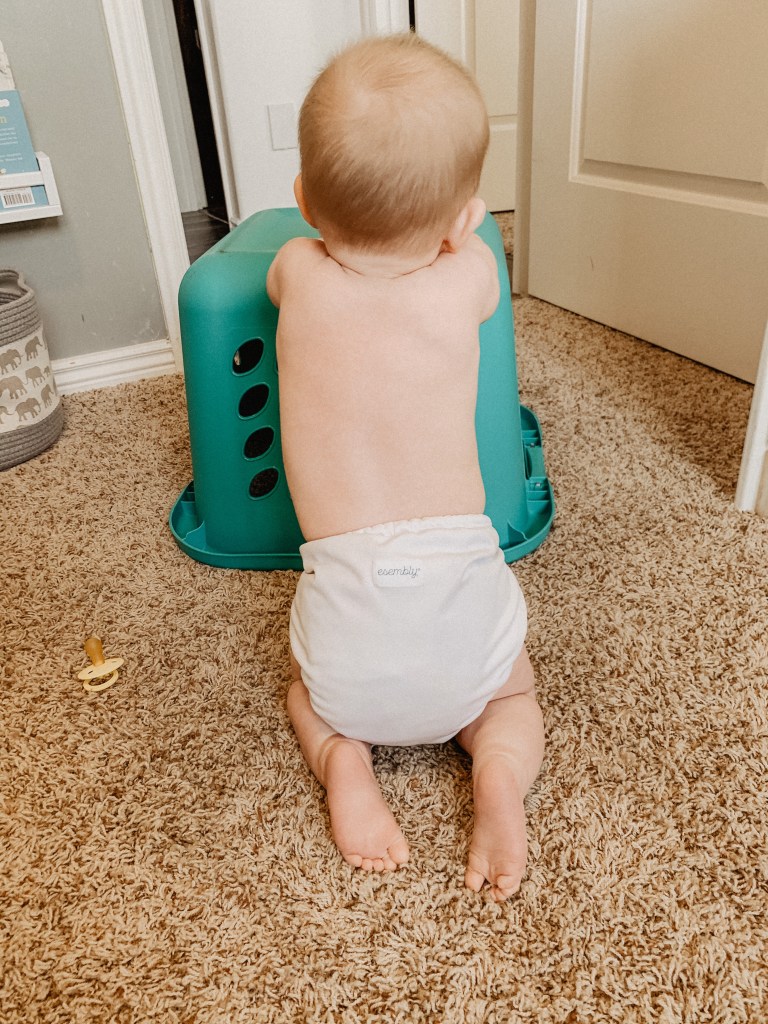
Okay, now that we’ve calmed down a bit and remembered that parenting is messy no matter how organized, earth-friendly, or socially aware you are or aren’t, let’s get down to some techniques you can use to make cloth diapering full time more manageable.
- Repack your diaper bag each night. I know it may seem like a hassle, but if you can get into a routine and have a consistent list of diaper bag content, this repack can take you as little as five minutes. I literally have a checklist saved on my phone of everything that I keep in my diaper bag and I just run through it each night. Doing this ensures that you always have the necessities when you’re running out the door and you don’t have to scramble to throw everything together when you’re already five minutes late. This tip also prevents you from accidentally leaving a wet diaper packed away in the travel wet bag for days.
- Create a routine. Store your diapers the same way each wash day. Pack your diaper bag the same way so you can easily know if you have everything. Make a checklist in your phone. All of these things can help you feel in control.
- Keep an emergency diaper kit in your car. I personally keep a small pack of disposable wipes, a couple of disposable diapers, and a plain onesie (that fits) in my car at all times. I do this for two reasons: 1) Calvin wears disposables to doctor appointments for ease of weighing and exams, and 2) I feel much more confident going out with my diaper bag packed with cloth if I know that I have a backup plan in the car in case everything really goes to hell.
- Give yourself grace. If the thought of trying to use cloth diapers outside of the house stresses you out, give yourself permission to use disposables some of the time. Build up to using cloth full time. Start with 30 minute runs to the grocery store or to your parent’s or in-law’s house. Then maybe the park or the zoo. Just take your diaper bag out to the backyard with you to see if you actually have everything you need and to prove to yourself that you can manage cloth diapers doing a quick change in the grass. I, for example, am very committed to cloth diapering full time, but when we went to Lake Powell on a house boat for five days, I left the cloth at home and used disposables the whole trip. Same for a four day trip to Yellowstone a month later. I knew that I wouldn’t have access to a washer and dryer to properly care for my diapers and that worrying about that would sour the vacations for me, so I left them at home and enjoyed myself.
WIGGLY BABY DURING CHANGES
This is a common issue for all parents once their baby learns how to roll and crawl, not just those who cloth diaper. But putting a cloth diaper on properly can be extrememly difficult with a wiggler.
Distract any way you can. I give him odds and ends to play with, distract him with the beeping of a thermometer, or change his diaper when he’s eating a bottle. Just figure out what distracts your little one well, and do that. I also change Cal’s diaper on the floor, rather than the changing table now. At least if he wiggles away, he won’t be falling off of anything.

I hope if you are on this cloth diapering adventure, or considering embarking, that you found something helpful in this post. I’ll continue to update it as Calvin grows and thing inevitably change with him. Until then, happy diapering!


 BARREL OF MERRELL'S
Leave a comment