My almost three year old, Calvin, was recently diagnosed with autism. Here’s how that’s going.

I’ve been thinking about this post for about a month, but I haven’t been sure how to write it. It isn’t anything like the other posts that I’ve written. It isn’t advice or a recipe or a product review. It’s just a blog post about my son and the things we’ve been learning about him over the last year or so. I wasn’t sure if I even needed to write this post, but Calvin’s autism is going to be a huge influence in how I parent in the future. Honestly, it’s going to affect every part of my family and our lives. And seeing as how I write about parenting and my family, it only makes sense to write about this too.
So. Calvin is autistic. Let’s talk about it.
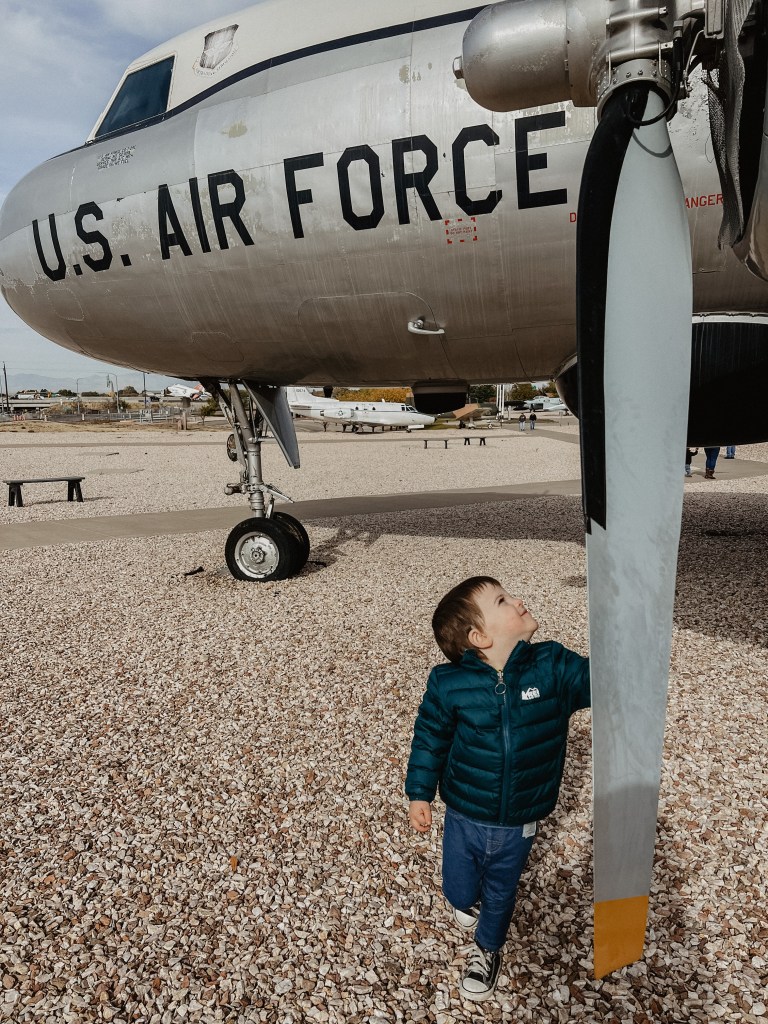
Before we begin, I need to put a disclaimer here. I am not a medical professional or any kind of neurobehavioral or developmental expert. I am not offering medical advice or education. I am only sharing my personal experience in these matters. At the time of the publication of this blog post, I live in the state of Utah.
REFERRAL AND THE WAITLIST
I started wondering about Calvin’s neurobehavioral health when he was about 18 months old. The the most noticeable trait at the time was Calvin’s lack of speech. By 18 months old, Calvin still had zero words. He used several signs and had a couple of word approximations, but no true words. His receptive language was on track for his age, leading us to believe that his hearing was fine.
We also noticed a few other things. Calvin tended to walk on his toes, he had no interest in other kids his age, he was suddenly a picky eater, he became very sensitive to messiness on his hands and face, and he was very particular about his clothing. These sensory and social quirks really weren’t too individually concerning, but adding them all together with the nonverbal communication caused me to wonder.
At Calvin’s two year old Well Check with his pediatrician, I filled out a simple autism screening form (standard practice at the clinic we attended) and my answers put up some flags for the doctor. After discussing the evaluation and my own observations, our pediatrician recommended we get in touch with a neurobehavioral clinic to have Calvin tested for autism.
That was February 2022. I called every behavioral analyst within an hour of my home and got waitlisted at every single facility. In April 2022, I got a call from one of them that they had an opening for an intake appointment in mid-August 2022. The intake appointment required a lot of paperwork from me and once we had that done, we were able to make testing appointments for early September 2022.
TESTING AND DIAGNOSIS
Calvin had two testing appointments with behavioral analysts. To my understanding, the first was a general neurobehavioral examination and the second was an autism-specific examination. Both tests were administered with me in the room, but only as an observer. The analyst talked with Calvin, gave him tasks to complete, games to play, and problems to solve. They observed his behavior with me, with his baby sister, and with themselves.
Each of these appointments took a little over an hour to complete and then we went home. I didn’t really get any new information at the appointments. After both testing appointments were completed, we scheduled a virtual appointment to get the results about three weeks later. It was at that appointment that Calvin was diagnosed with Minimally Verbal ASD Level 2.
ABSORBING THE DIAGNOSIS
It was an interesting experience to get that diagnosis. Because in that moment, nothing changed and everything changed.
Nothing changed about Calvin. He is exactly the same sweet boy that I’ve been raising for nearly three years. He didn’t suddenly start “acting autistic”. A switch didn’t flip in him that turned him into someone else. He’s the same beautiful kid I’ve been getting to know for his whole life.
And yet it felt like everything changed. Suddenly, the confidence I had in him someday learning to talk, be potty trained, dress himself, make friends, get a job, move out of the house, and so on was suddenly gone. Or at least greatly diminished. All of the typical expectations that I had were blown into dust and scattered on the wind. And I suddenly felt completely and entirely inadequate as his mother. Not that I felt like I had all the parenting answers before, but now I was really in over my head.
It was also a heavy burden to suddenly feel resting on my shoulders. The responsibility to not only be his mom, but to be his advocate, his teacher, his regulator, his social connection, his protector in so much more intense ways that the parent of a neurotypical child is. To know that I would likely have to either homeschool him or to be fighting for his education and accommodation every single day in the public school system. To know that he may not naturally develop the skills he would need to make friends, so it would be on me to find social circles that will accept him and on me to teach him how to be kind and a good friend. To find speech, occupational, and ABA therapists that he connects with and who are truly on his side. To know that he may never move out of my home and that I may have to make arrangements for his care by siblings or a home after Colter and I pass. There is a lot.
HOW IT’S AFFECTING US NOW
As of now, our lives don’t appear to have changed much. We are preparing to move cross country and once we arrive and settle, we will begin the process of finding therapists and groups to help Calvin gain tools to thrive in a world that isn’t set up for his success. The things we do on a daily basis to help his world be more comfortable for him include:
- Including American Sign Language into our daily communication
- Accommodating Calvin’s sensory needs and preferences whenever possible with his hair, clothing, and grooming
- Always giving Calvin a heads up when something is going to end or change (like a movie or when it’s time for bed)
- Allowing him to take breaks when he is overwhelmed and overstimulated
- Letting him complete his tasks whenever we can before asking him to do something else or move his focus
- Always serving at least one familiar and safe food at meal times
- Allowing safe space for long meltdowns and tantrums
- Saying “Yes” whenever we can
I’m sure there are other things we are doing that I’m not thinking about right now. Calvin’s communication and sensory needs are our biggest hurdles at the moment, but we manage pretty well.
LOOKING AHEAD
I honestly don’t have any idea what our future holds. I’m fairly confident that we will be entering a least a couple of years of various therapies. We will accept Calvin exactly the way he is, while also doing our best to give him tools to thrive. That philosophy will apply to all our children. I don’t know where we’ll be in a year, or five, or ten, or twenty. All I know is that I love my little boy fiercely and I’m so grateful for the support we’ve received so far and that we were able to get this diagnosis early to give him the most advantages in life that we can.
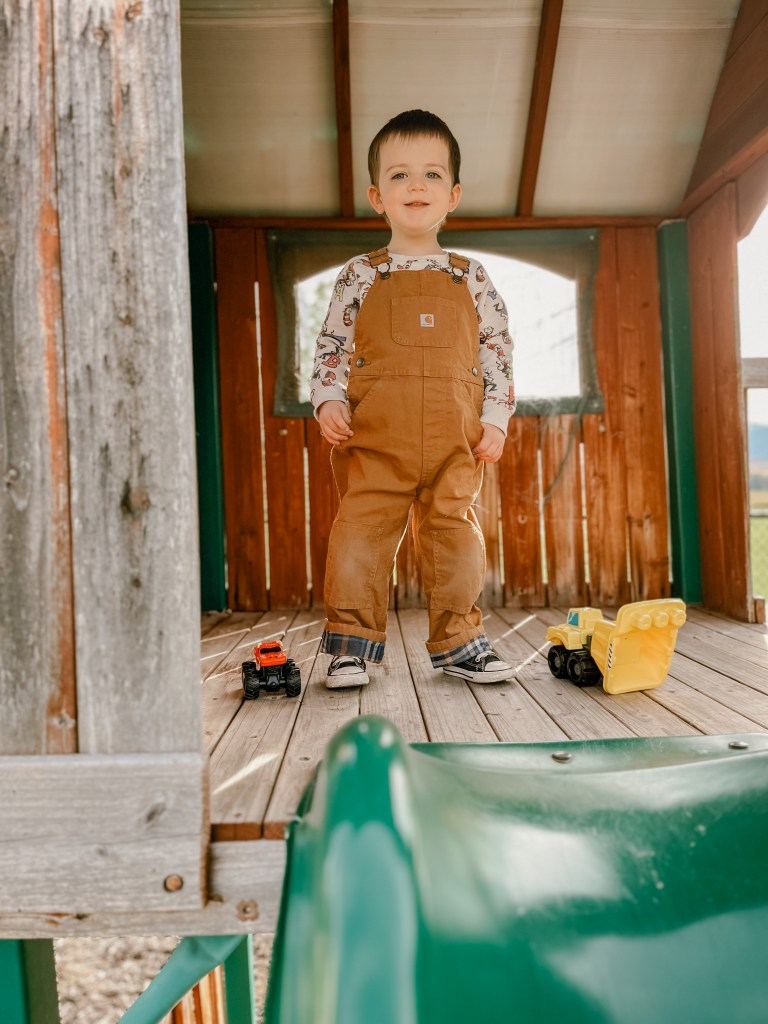
Well, there you have it. Calvin is autistic. And he is the same little boy he always has been. I’ll be sharing more information and blog posts about things we do and learn along the way. One thing I will say is that through all of this, I will be doing everything I do for Calvin out of love and with the intent to do what is best for him. Opinions, thoughts, and experiences are always welcome here but nastiness, name calling, shaming, threats, and pointless negativity will not be tolerated. This is my space and I will protect it as a space of kindness and help.
Thank you for reading and being here with me.




I am on the autistic spectrum as well. Let me know if you have any questions on autism! Thanks for sharing!
Feel free to read some of my blogs on autism 🙂
LikeLike
Thanks for this! It’s always reassuring to see parents who believe in, and accept people like us. Reminds me that all this advocacy is worth is.
LikeLike
oops! I meant “worth it”.
LikeLike